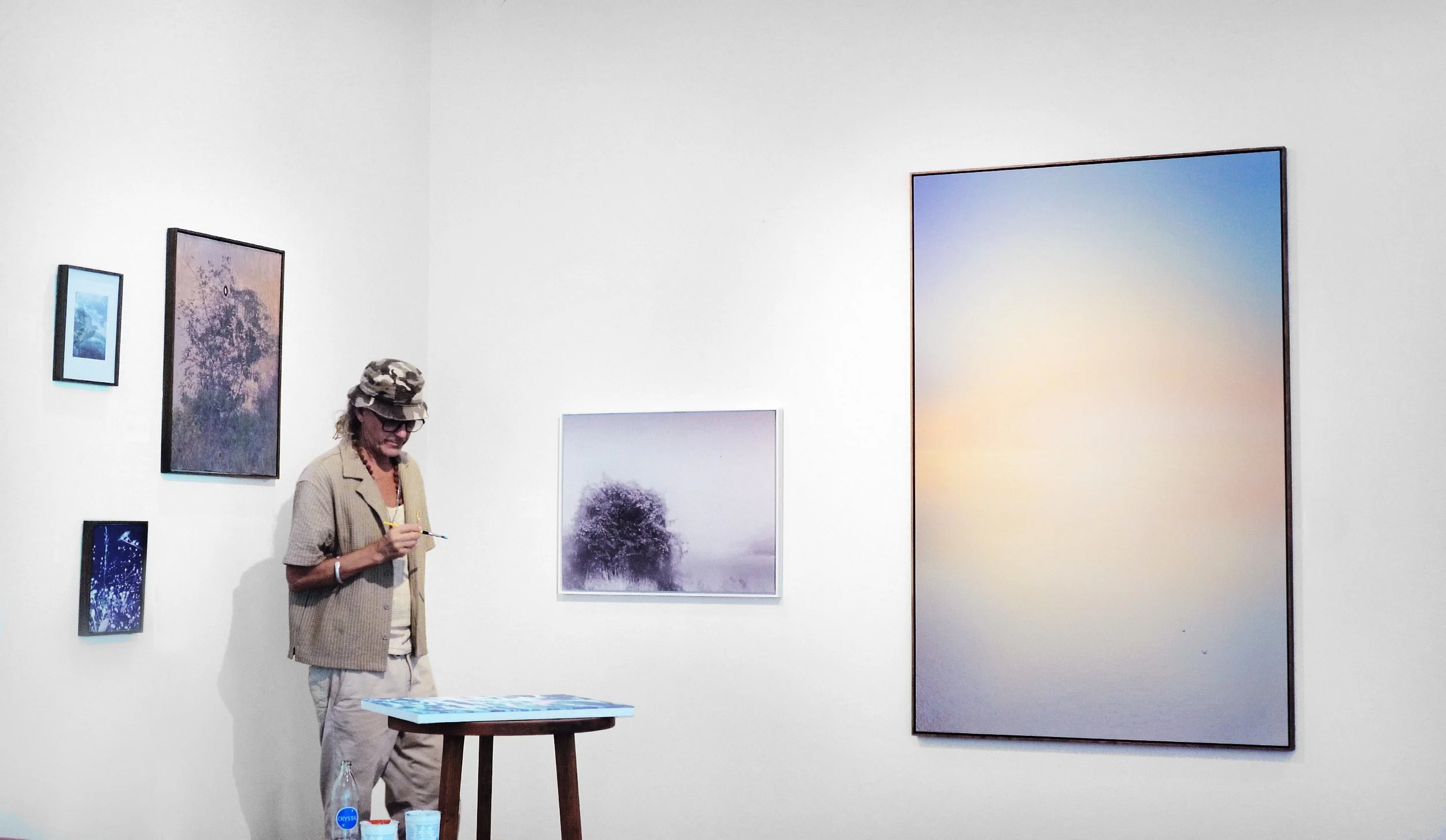
Andrei Jewell is a multidisciplinary artist whose practice spans photography, sound and video installation, sculpture and performance, employing Nature and the ocean as central metaphors to investigate the spiritual and somatic dimensions of humanity’s relationship with the natural world. Informed by Eastern philosophy and Zen aesthetics, his work layers together environmental narratives and immersive soundscapes, rendered through a distinctive hand-finished analogue process that positions his output at the intersection of the painterly and the photographic. His work simultaneously maps the hidden with the audible and inaudible spectrum of soundscapes that often imperceptibly shape our identities with the world.
Selected Exhibitions
2026 WHERE THE PINK DOLPHINS DREAM, The Powell Gallery, Kamalaya, Koh Samui, Thailand
2025 ENCHANTED MATTER, Director, Feature Documentary, Kathmandu FF, Nepal, Santa Barbara FF, USA
2025 WHERE THE PINK DOLPHINS DREAM, PT Gallery, Bangkok, Thailand
2024 THE CRYSTAL COVE, Atelier Gallery, Koh Samui / Shivari Centre, Koh Pha-nang, Thailand
2023 THE CRYSTAL COVE, Solo-Exhibition, ‘The Longhouse’, Whynam Bay, Koh Pha-nang, Thailand
2020 BREATHER, ( Video ) Power-Play Art Biennale, Singapore
_______________________________________________________
2019 LESS PLASTIC MORE FANTASTIC ( Doc) Cannes Lion Festival, France
2019 THE RIVER WITHIN, Pyramid Centre, Koh Pha-nang, Thailand
2018 I AM OCEAN ( Film Installation) Eminent Domain Show, fmr. Robert Miller Gallery, New York
2017 FANTASTIC EGG, LWML Foundation, Stress Field Biennale, Hubei Museum, Wuhan, China
2015 FUTURE PRIMITIVE, Dots&Clouds, 'W' Koh Samui, Thailand
2012 AFTER THE TRANSIT OF VENUS, Solo Show, Jasmax, Auckland, New Zealand
2011 AMANDEUS, Collective, SMAK Biennale, Ghent, Belgium
2007 - 2011, THE WORLD TOP 200 Photographers, Selected by Lurzer's Archive Publication, Austria
2010 THE HOLIWATER, PROJECT Performance Installation, Prana Festival, New Zealand
_______________________________________________________
2009 HOLIWATER, Solo Show, Govett-Brewster Gallery, New Plymouth, New Zealand
2008 TRUE SOUTH, DoP Commission for Isaac Julian, Two Rooms Gallery, Auckland, New Zealand
2008 AFTER IMAGE, Group show, Two Rooms Gallery, Auckland, New Zealand
2007 THE HOLIWATER PROJECT, Jaipur Heritage Festival, India
2006 CINEMATOGRAPHY, DoP Commission for Runa Islam, Turner Prize Finalist, TATE, London
2004 THE HOLIWATER PROJECT, WOMAD Festival, New Plymouth, New Zealand
2003 THE HOLIWATER PROJECT, Auckland Museum, New Zealand
2003 ATMOSPHERES, Solo Show, MIC Gallery, Auckland, New Zealand
2003 FANTASTIC EGG, LWML Foundation, Australian Centre of Photography, Sydney
2001 FANTASTIC EGG , LWML Foundation, Asia Pacific Triennale , Queensland Art Gallery, Australia
2000 PUBLIC SERVICE ANNOUNCEMENT, Te Papa National Museum, Wellington, New Zealand
2000 M.I.L.K, Humanity Exhibition, Sydney Opera House, Australia, Science Museum London, Grand Central Station, New York
Practice
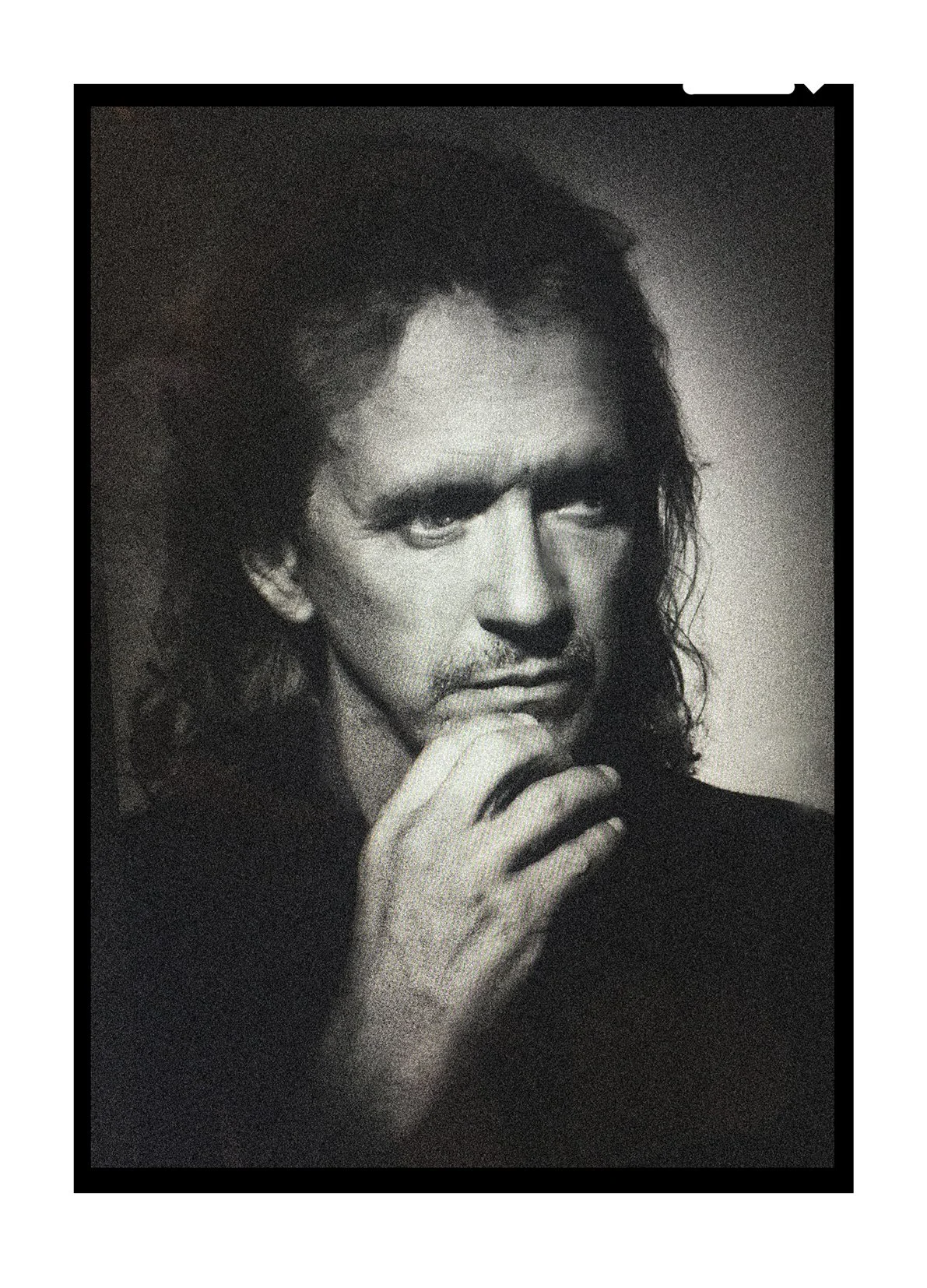
1963 | Harare, Zimbabwe | Education - New Zealand, Japan | Celtic & Polynesian heritage | Residency - Thailand
Andrei Jewell makes work that weaves narratives around human relationships with the environment, cosmology and contemporary visual language.
His solo, collaborative and commissioned works featured in art biennale festivals and major museums, from London’s TATE Modern and Sydney’s Australian Centre for Photography, the Hubei Museum of Art, China to the Govett-Brewster Gallery, New Zealand. New York publication Visionaire Sound53 featured Andrei Jewell with Yoko Ono, Doug Aitken, Cindy Sherman, Gary Hill, David Byrne, Sonic Youth and Kraftwerk amongst a list of 100 Selected Artists. Andrei Jewell’s audio-based visual works continue to be exhibited and collected regularly through solo shows in galleries and site-specific installations. Less Plastic More Fantastic, a short self made documentary on his art with ocean plastic was screened at Cannes Lion Festival, France. In 2025, Enchanted Matter, a feature length biopic documentary about the painter Robert Powell on the subject of Himalayan Tantric Shamanism directed by Andrei Jewell screened in Film Festivals in Kathmandu, Nepal and Santa Barbara, USA. Current Himalayan film projects include a documentary set in the Buddhist Kingdom of Bhutan.
Living on a remote headland on an island in Thailand’s Gulf of Siam, for over a decade , Andrei Jewell’s installations and exhibitions have consistently focused on Nature as a metaphor. His primary muse being bodies of Water and in particular the Ocean, her vast abundance, mystery, moods and medicine.
Origins
Discovering Zen philosophy early in life while on a scholarship in Kyoto, his interest in Eastern thought led to an extended period in India, studying at a traditional meditation school rooted in Kashmir Shaivism, Advaitan Vedanta and esoteric yoga practice. His travels took him deep into some of the most remote Buddhist valley kingdoms of the high Tibetan Himalaya. Over a decade of his forty-year career was spent studying, recording and performing with the music cultures of India’s Ganges River - in particular the West Bengali Baul, a syncretic mystic tradition of bard-musicians whose rustic poetry is steeped in Nature and drawn equally from Sufi and Tantric traditions - including thousands of kilometres travelled along the Ganges recording two elderly wandering Baul singers, one blind from birth.
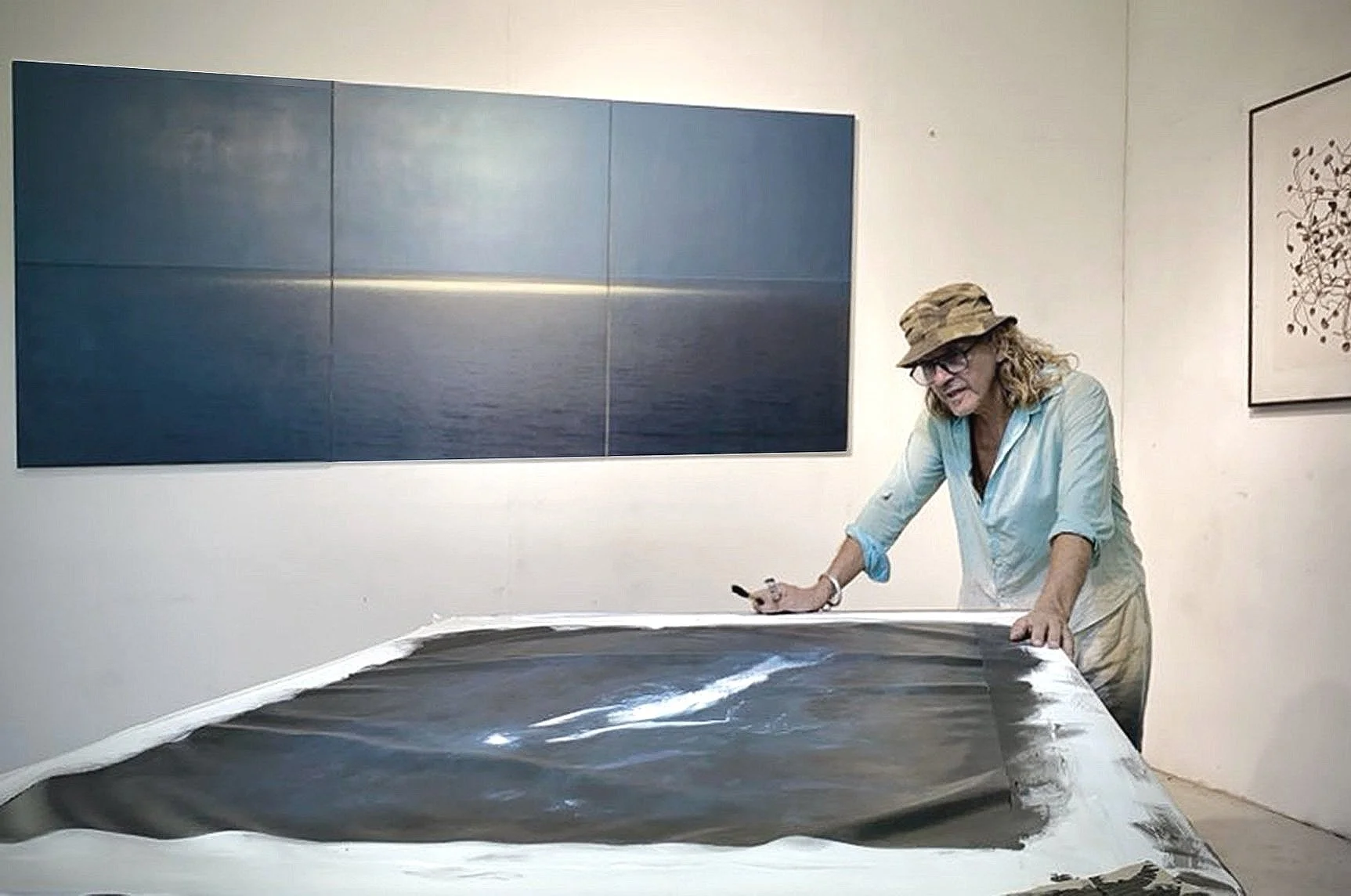
The subjects Jewell has worked with over the past decade are found almost exclusively in his local environment. The process begins conceptually - recording explorations of the area - where specific sounds emerge, forming a syntax to engage with the subject, shaping the mood of each filmed or photographed piece. The visual work begins as a pigment print on flax linen canvas, a material used for centuries by oil painters and intrinsic to the old masters.
The final and most time-intensive stage employs a layered mixed-media approach with a finishing technique Jewell terms overpainting - a hand-rendered process occasionally incorporating fine metallic powders, evaporated sea salt or light-sensitive UV inks to illuminate particular details or narrative threads. He describes this as “a negotiation between the painterly and the photographic” - a deliberate return to analogue rather than digital finishing, the work physically retouched by hand rather than any AI-driven process.
The rustic holds deep importance for Jewell. Drawing inspiration from Baul and Zen traditions - their music, painting and art forms - he brings a minimalist simplicity to his methodology. Born in Zimbabwe and raised in rural New Zealand, early exposure to both African tribal and Māori cultures, their dances, songs and adornments, continues to surface as a nuanced undercurrent throughout his work - in performance, and in the totemic motifs woven quietly through his imagery. Living in nature extensively he has continued to explore the fragile impermanence of human existence through his practice.
Deep Listening
Deep Listening, a term Jewell applies as a subtext to all his work - where that practice finds its fullest expression - rooted in place, in the body, and in the transformative presence of natural sound.
Jewell lives at the very edge of a national park on a jungle-clad island in the Gulf of Siam, a proximity to Nature that has been central to his work for over a decade. His clifftop studio faces a commanding view of the sea - all seasons present, all of the time. Monsoon included. This closeness carries particular weight in the current age of rapid climate change, marked by violent storms and flash floods witnessed across the world.
His photographic and film works are often set in a single place of solitude he calls The Crystal Cove - a hidden inlet rich with surviving corals and surrounded by massive crystalline rocks, found just below his studio. Free of any artifice, his figurative work exposes the body directly to sun, moonlight and salt water - on rocks, in the sea, in the surrounding jungle. His seascapes are vast and empty, expressing the prevailing conditions of light and weather, their stillness bleeding naturally into his video installation works. The thread running through all of it is the emanation of Nature’s sound. Jewell refers to these as “variant frequencies one can palpably feel but is unable to hear within a photograph - a type of mute artefact of memory.” It is from this point of departure that the works are made.
As with much of Jewell’s practice, the site-specific spatiality of sound and the environment it inhabits is central. With The Crystal Cove Cantos, grounding the body and its pranic system of subtle energy is key - drawn from Eastern mystical and spiritual philosophy. For Jewell, water and its movement through waves, flow and rain induces a subtle healing charge in both body and consciousness - drawing the self back toward natural balance, unimpeded by the white noise of modernity that so often disrupts the deeper brain states, commonly known as flow, most readily accessed through meditation.
His visual work depicts immersion of the body in raw nature, often suspended, floating, breath as palpable subtext. Monsoon, with its rains, shifting moods and vast sonic range, proved a particularly potent influence across several works in this selection. Jewell draws notably from Zen ink painting and the European Romanticism of the 18th and 19th centuries, where the human figure appears small within vast landscape - immersed in inner silence amid the deep sounds of Nature. His subjects are thus recorded in an act of return and repair with the natural world. With Deep Listening, he frequently activates exhibitions through ritual sound performance - the audience becoming participant, invited by the artist into a more expansive stillness - what he refers to as “Nurture remembering Nature.”
LESS PLASTIC MORE FANTASTIC For a behind the scenes look at Andrei Jewell’s environmental film making practice with community art making engaged with Ocean Plastic pollution - view the Cannes, France featured (Lion Festival) mini documentary below
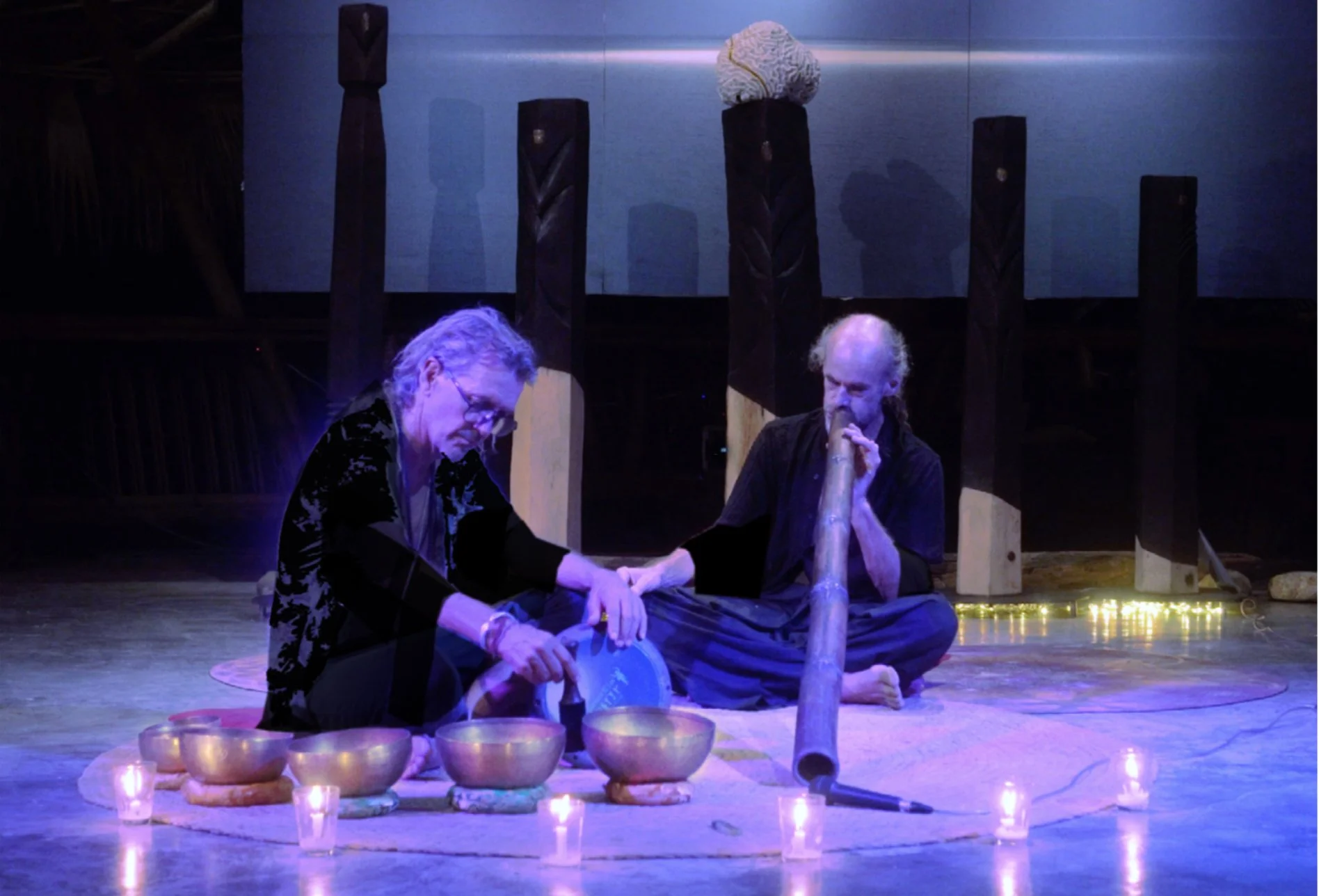
Andrei Jewell accompanied by Brian Moore
Sound Performance with Totem Installation work
Tibetan Bowls, Shaman Drum, Didgereedoo
The Crystal Cove Exhibition
Shivari Centre, Koh Phangan, Thailand
Review
At a moment when contemporary art discourse is deeply engaged with questions of ecological perception, post-digital materiality and expanded photography, Andrei Jewell's practice arrives with unusual coherence and timeliness.
Working outside the major art centres, from the Gulf of Siam coastline to international biennale contexts, Jewell develops a rigorous methodology in which the photographic image is systematically de-stabilised: printed on flax linen and cotton, then hand-finished with evaporated seawater, local clays, metallic powders and gold leaf, and embedded with field-recorded sound, the works resist the purely retinal and demands a bodily, durational encounter. This positions Jewell's practice within, yet distinctly beyond, established conversations around sound art, land art and materialist photography, proposing instead what might be understood as a phenomenology of listening, in which the natural environment is not merely subject matter but the generative condition of both form and meaning. As renown innovator of the photographic medium Robert Frank quoted, “The eye should learn to listen before it looks”.
Undergirding this entire body of work is a sustained philosophical preoccupation with the limits of language itself, the ocean functioning not simply as landscape or metaphor but as the artist's primary figure for that which exceeds articulation: the pre-verbal, the somatic, the dimensionless interior that language perpetually circles but cannot enter. In this sense Jewell's practice aligns with a lineage of thought running from Merleau-Ponty's phenomenology of embodied perception through to contemporary ecocritical theory and the poetics of silence, proposing the artwork as a site where meaning is not communicated but dissolved into direct experience, where the viewer is returned, however briefly, to a state prior to the word, perhaps even the breath itself. Philosopher Roland Barthes notably writes in his seminal work, Camera Lucida: Reflectons on Photography, “How can we change the way we see?”
For academic and curatorial audiences increasingly attentive to non-Western ecological epistemologies, the crisis of representation in the Anthropocene, and the constraints of the digital image, Jewell’s sustained, place-based practice offers a body of work that is simultaneously aesthetically refined and conceptually grounded, yet defies any expedient category. It occupies a genuinely rare position - the systematic collapse of photography into immersive sonic and material experience - proposing the photographic image not as representation, but as a threshold object at the very limits of what language can hold. It is a practice where light becomes sound - and body with nature merges to become prayer.
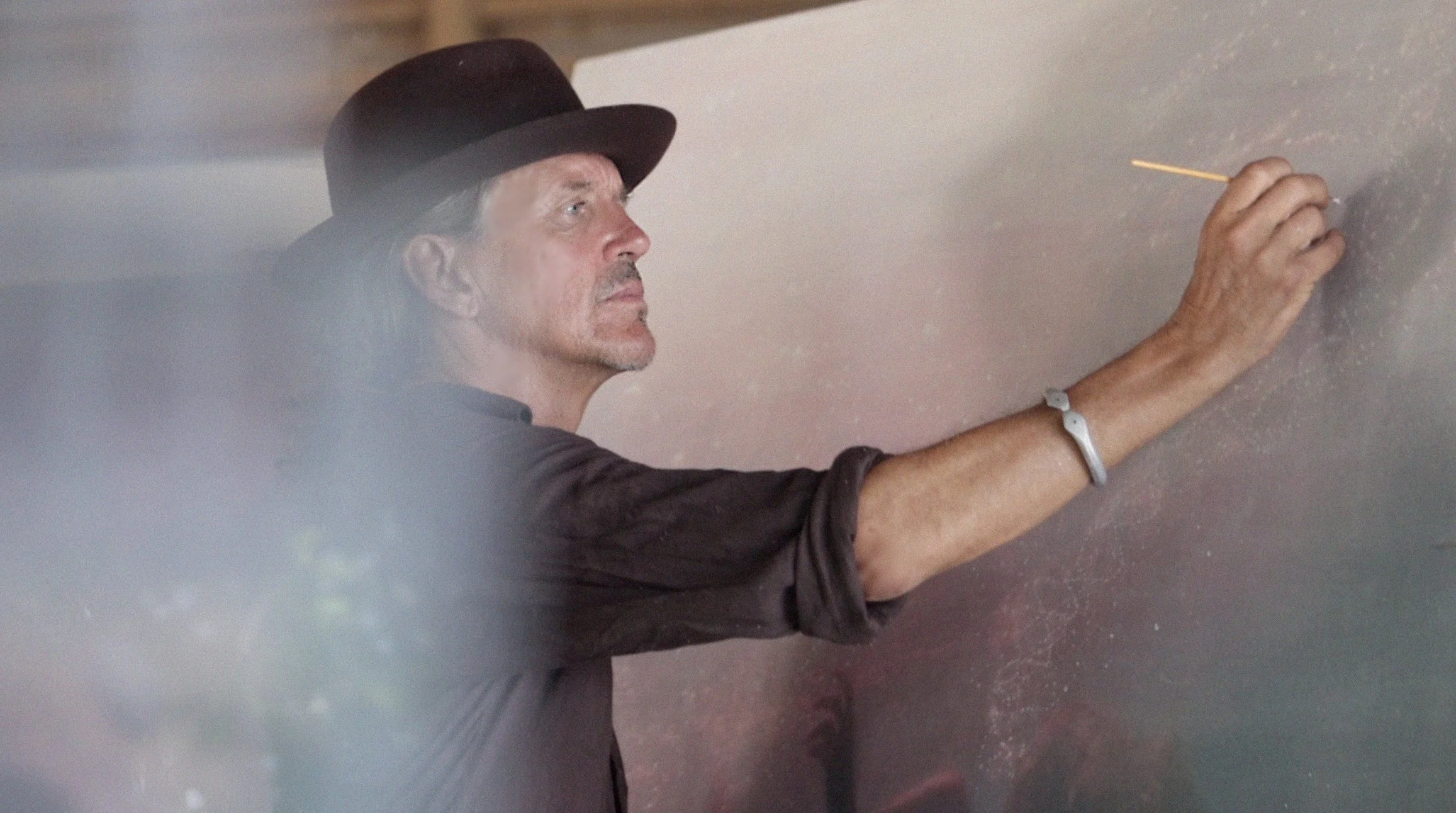
MEDIA
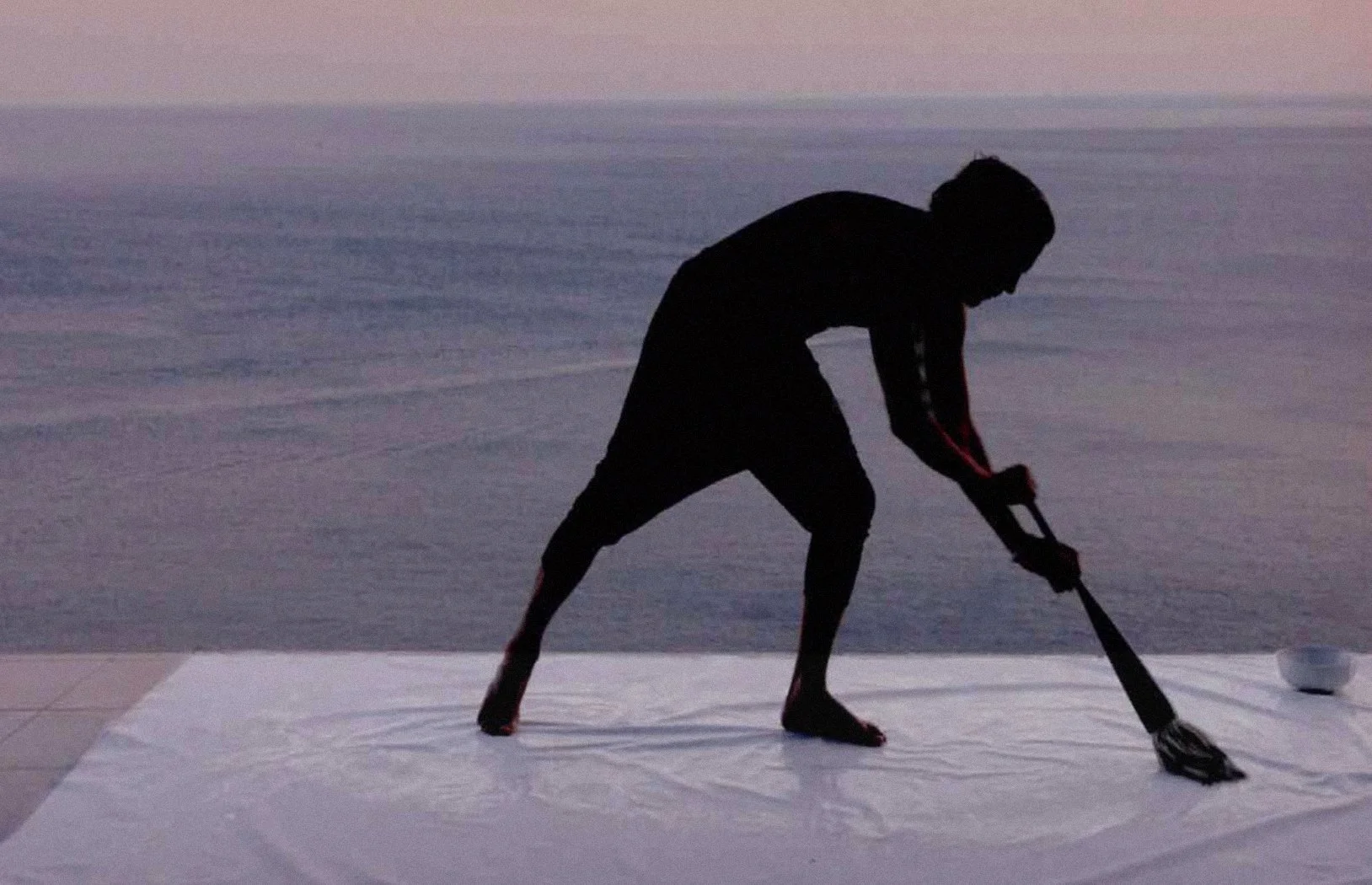
Review
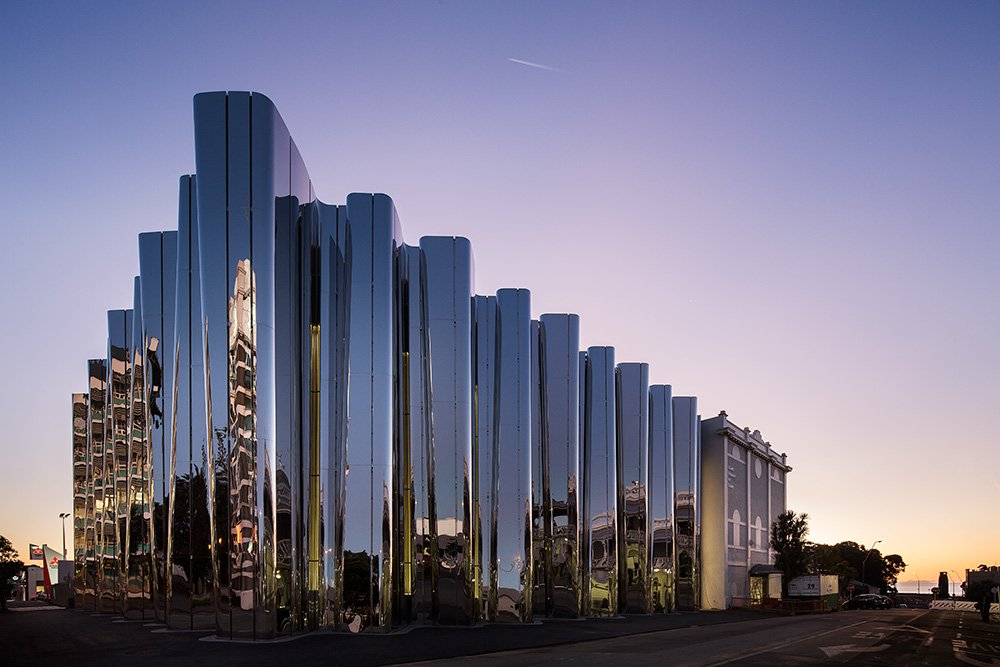
Govett-Brewster Art Gallery
Andrei Jewell’s Holiwater is a two-week installation embracing photography and film, classical Baul singing, electronic music, and breathtaking live performances at the prestigious Govett-Brewster Art Gallery.
Born from the Ganges river of India, the Holiwater Project’s ambition is to inform and inspire positive action to stop the world’s water crisis turning to catastrophe.
The Govett-Brewster Art Gallery in New Plymouth is the sole host for the Holiwater performances in New Zealand on 2 and 3 October.
New Zealand filmmaker Andrei Jewell gathered together international musicians, The Holiwater Project to engage on both an arts and action level across world-wide audiences.
The installation of film, photography and music culminates at the Gallery, on Friday 2 and Saturday 3 October, with captivating public performances conceived to bring the experience of the river to the audience. Indian Baul singers will perform accompanied by live percussion and electronic music beds, within an environment of reflective video projection.
Holiwater curator and Govett-Brewster Art Gallery Director Rhana Devenport says the Project evokes questions relevant to all of us. “With water quality an ever growing concern in New Zealand and Taranaki, Holiwater’s focus on this global issue through traditional mystic singing, contemporary sound and visual environments is indeed important and timely in focusing our senses and awareness on this issue.”
Andrei Jewell says that as a photographer and video artist he was inspired by the music of the Indian landscape and while he set out recording many great classical musicians he found himself preoccupied documenting two wandering Baul musicians on a pilgrimage along the Ganges river banks.
Jewell explains: “The Bauls worship the river through their music, they are mystics who see the river as a living deity. I noticed their reaction to the vast changes that had occurred to the river itself over a significant period of their lives. The river revealed many things that shape our modern world…its rhythms, its beauty, its people, its meaning for humanity and, sadly, its rapid deterioration in the face of neglect and misunderstanding…”
Since the turn of the millennium, The Holiwater Project has gathered together international artists – filming their music and performance – to give voice to the Ganges, her plight, and to focus attention on the sustainable management of water globally. This is the ninth year the project has partnered with regional and international organisations working with water and local communities.
“The mission is global. Holiwater is a personal portrait of India’s most sacred river.
It is an attempt at revealing her mystery and the extent of her demise – given that her condition shows so vividly the vulnerability of the Earth’s limited fresh water supplies in an uncertain age marked by rapid climate change,” says Jewell.
Holiwater: Installation and performance
19 September – 4 October 2009
Curator: Rhana Davenport https://www.instagram.com/rhanadevenport?igsh=aDg3dncwd2wwcWp6
www.artartworks.com/exhibitions/holiwater-installation-and-performance-1684/
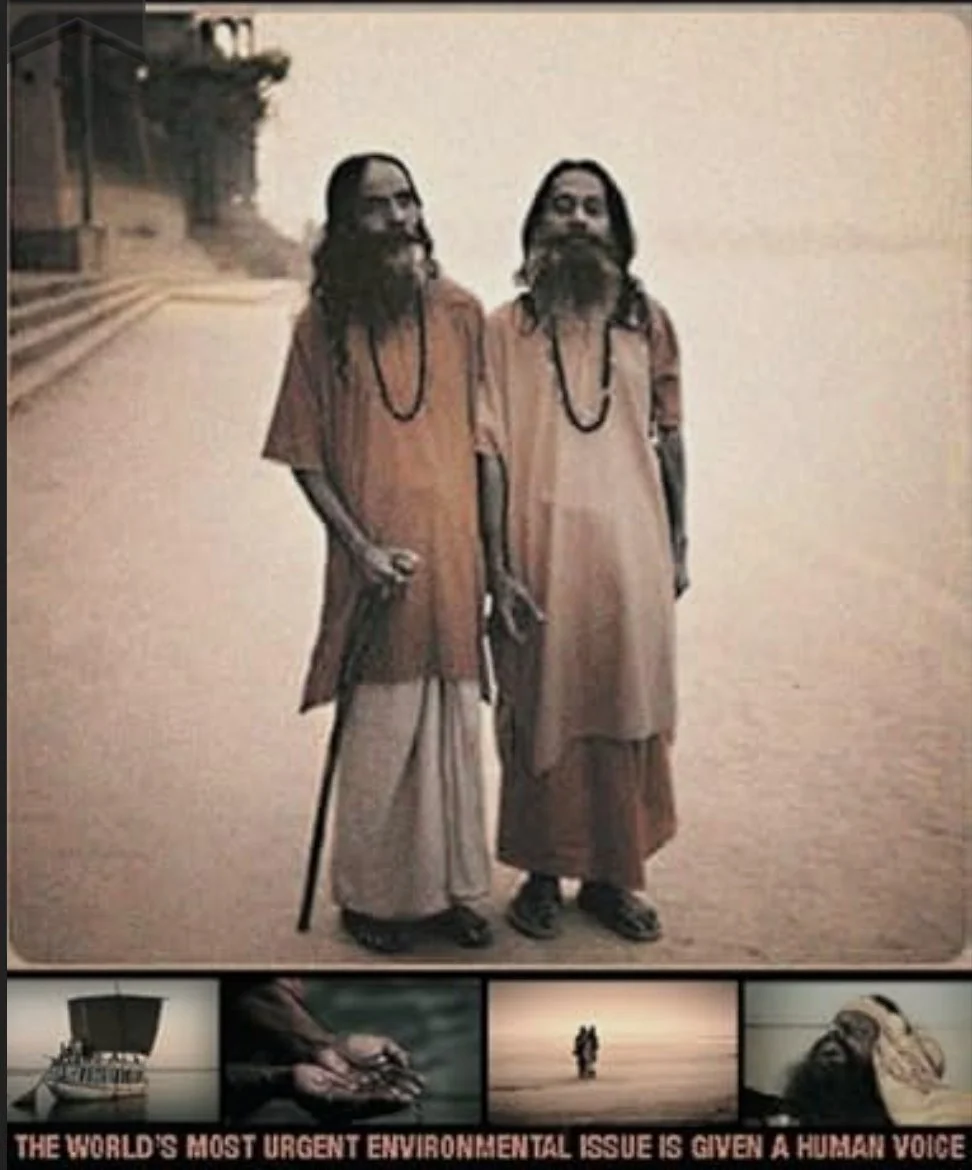
Holiwater Documentary Trailer

Holiwater: Video Installation View - Two Channel
Nagar Fort Step Well, Jaipur Heritage Festival, Rajasthan, India 2007
Essay
The Permeable Membrane: Ecological Consciousness and Somatic Re-Entrainment in the Practice of Andrei Jewell
At a moment when the discourse around ecological crisis has largely exhausted its capacity to move through the register of information — when the proliferation of data, documentation, and moral appeal has produced not mobilisation but what Glen Albrecht has termed solastalgia, the chronic psychic distress of a species estranged from its own iving ground — the question of what art can do becomes urgent and specific. Representation of the crisis has proven insufficient on its own. Andrei Jewell’s practice is one attempt to work at the level where the crisis originates: in the perceptual and somatic dissociation of the modern subject from the natural world. Whether that attempt succeeds, and where it runs into difficulty, is worth examining as closely as the ambition behind it.
Medium as Argument
Jewell works primarily in large-scale pigment print on flax linen, a medium choice that carries its own argument. Printing photographic imagery onto linen rather than conventional photographic substrate resists the dematerialising tendency of contemporary image culture — the reduction of the visual to pure signal, weightless and infinitely reproducible. Linen has grain, texture, a material presence a screen denies. To encounter a Jewell work is, in the first instance, to encounter an object insisting on its own physicality. This is deepened by additional material registers: gold leaf, metallic finish, evaporated seawater, embedded audio. The evaporated saltwater in Gate’ Gate’ Gate’ (2023) is literally oceanic matter, carried from the Gulf of Siam and fixed into the work’s surface —not a representation of the ocean but a fragment of it. The gesture places the work in dialogue with arte povera’s insistence on the indexical trace, and with a specifically ecological claim: that the boundary between artwork and world is permeable. The risk in this strategy is real and worth naming. Indexical material of this kind — actual seawater, actual coral dust — can tip easily into gesture for its own sake, a kind of materialist sentimentality that asks the viewer to be moved by provenance rather than by the work’s formal intelligence. Not every piece in the body of work resolves this tension equally well; the strongest pieces earn the material inclusion through the rigor of the image itself, while in weaker moments the material risks functioning as a substitute for that rigor rather than an extension of it.
Departure from the Photographic Canon
Hiroshi Sugimoto’s Seascapes (begun 1980) is the unavoidable precedent for any artist working the minimally rendered ocean horizon. Sugimoto’s project is phenomenological and durational: long exposures collapsing time into a meditation on geological deep time and photographic ontology, the ocean held as philosophical constant, indifferent to the human. Jewell’s oceans are not indifferent — they are specific, threatened, and materially continuous with their originating environments. Where Sugimoto contemplates, Jewell implicates. But this comparison cuts both ways: Sugimoto’s coolness is also a discipline, a refusal to tell the viewer how to feel. Jewell’s warmer, more materially insistent approach trades some of that discipline for immediacy, and a viewer less sympathetic to the ecological framing may experience the insistence as didactic rather than immersive.
Thomas Ruff’s engagement with the photographic image as cultural and technological construct — manipulated press photographs, internet-sourced imagery, deliberate exposure of photography’s meaning-making codes — represents a dominant critical mode in late-twentieth-century art photography: the medium turned on itself. Jewell’s images are not primarily about photography as a system; they are about specific places and their ecological condition. This is a different project, not a superior one — Ruff’s self-referentiality is doing serious critical work that Jewell’s practice, by its own choice of subject, largely sets aside.
Wolfgang Tillmans’s practice — spanning installation, abstract light work, documentary— shares with Jewell a refusal of hierarchy between subject and surface, and a commitment to light as material. But Tillmans operates within a secular, urban, socially expansive frame; Jewell’s is ecological and contemplative. The comparison is useful less as a hierarchy than as a way of locating Jewell’s specific address, which is narrower than Tillmans’s in subject but not obviously more urgent for being narrower.
Diagnosis
The works are organised around horizon — compressed, luminous, often radically minimal. In Singularity: Gold (2025), a landscape is reduced to a single horizontal sliver of light suspended between darknesses, mounted in native Thai teak. Almost nothing remains of the visual field but the threshold moment itself. This formal strategy stages a diagnostic claim: that ecological disengagement is, in part, a crisis of attention — that a perceptual apparatus trained by screens and fragmented digital temporality has lost the capacity for sustained, receptive attention through which relationship to the natural world is constituted. It’s a claim with real Intellectual pedigree, but it is also one the art world has made often enough that it risks being received as familiar rather than as argument. What distinguishes Jewell’s version from a generic slow-art position is the specificity of the ecological referent — the Gulf of Siam, the klong systems, a named and particular body of water — rather than horizon- as-such. The embedded audio extends this into a somatic register, addressing the body rather than only the eye. Jewell’s own writing describes the intended effect as “a slowed down, internalized state,” which trauma-informed somatic theory would recognise as a parasympathetic shift. This is a plausible physiological account, though it is also one that is difficult to verify from the work itself and easy to assert rhetorically; the strength of the claim depends on the audio’s craft in a given piece rather than on the theory backing it.
Eco-critical Positioning
Gregory Bateson’s argument in Steps to an Ecology of Mind — that the subject/object dualism underwriting Western modernity is the operative mechanism of ecological destruction — finds a visual and somatic correlate here, though correlate is the right word rather than proof: the work stages a dissolution of separation experientially, but staging is not the same as achieving it, and how durably that effect survives outside the gallery is an open question the work doesn’t answer. Amitav Ghosh’s argument in The Great Derangement — that Western culture lacks the narrative frameworks through which ecological emergency can be apprehended — gives Jewell’s practice a plausible frame: not illustration of loss, but retraining of perception. Timothy Morton’s “dark ecology,” which insists on dissolving romantic pastoral distance so the human subject recognises itself as inside the ecological mesh, is similarly operative in the immersive scale of works like Gate’ Gate’ Gate’. These are strong theoretical anchors, but they are also frequently invoked in contemporary eco-art criticism, and the work’s success depends less on citing them correctly than on whether a given piece actually resists “safe aesthetic distance” for a specific viewer in a specific room — which varies, and which no framework guarantees.
Situating the Practice
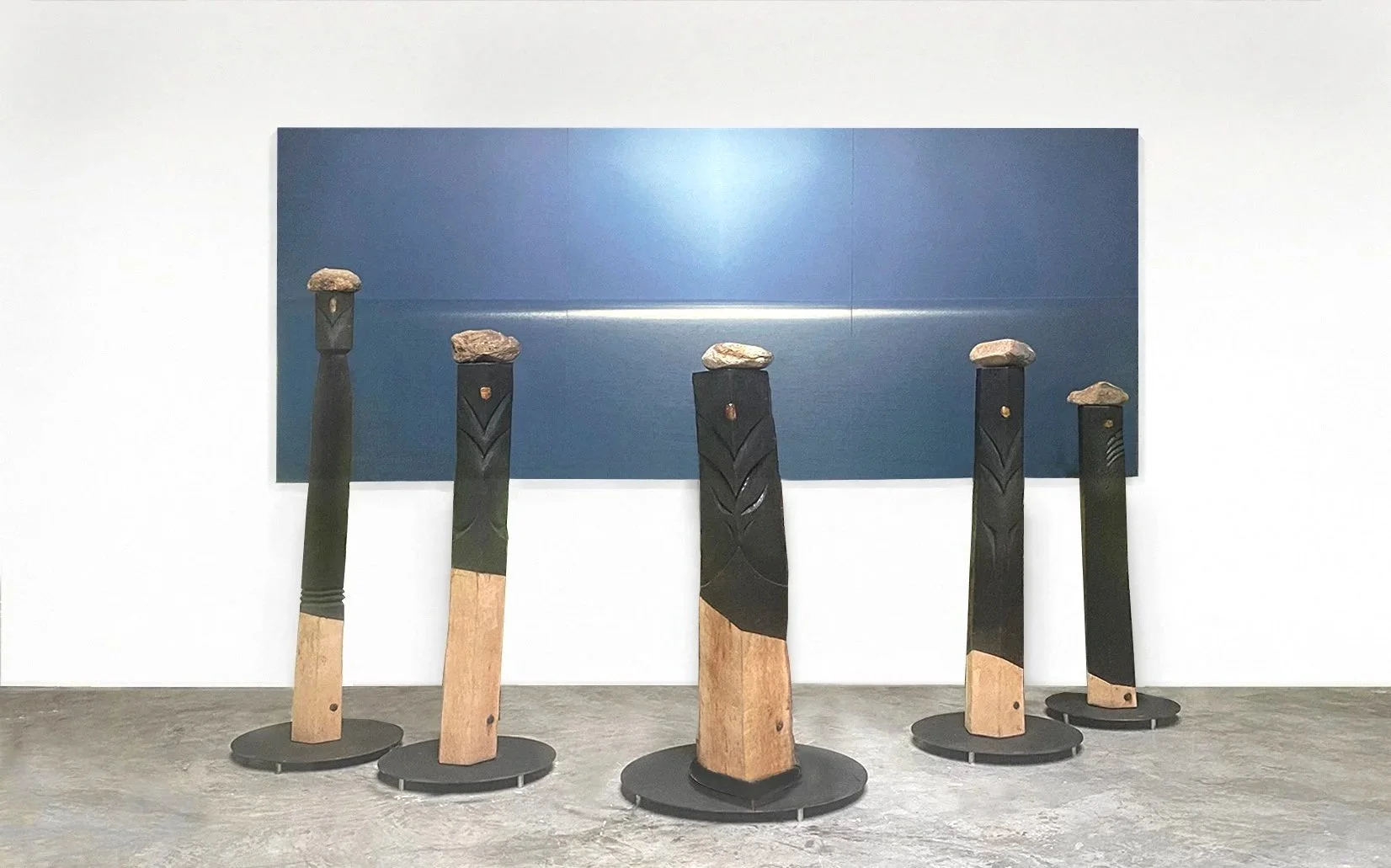
Olafur Eliasson’s environmental installations, Agnes Denes’s ecological conceptualism, Wolfgang Laib’s work with pollen and beeswax — these establish that material-ecological practice can hold major institutional ground. Jewell’s practice differs from these in its specific geographic rootedness: working from and within the Gulf of Thailand, drawing on a lived relationship to the Gulf of Siam, the klong canals, the coral systems of the region, rather than a generalised environmental aesthetic. In Gate’ Gate’ Gate’ with Totems (2024), a collaboration with Māori carver Tane Mahuta Heke, coconut pillars bearing coral crowns stand as sentinels before a local seascape, tracing a line from the South Pacific into the Gulf of Siam. This situatedness is a genuine strength, and also a genuine constraint. A practice this specifically rooted in one place and one set of traditions (Ngoma ceremony, Māori cosmology, Himalayan Buddhist training, Advaita Vedanta, Gulf of Siam ecology) runs the risk that a wide range of source traditions can read, to a skeptical viewer, as spiritual eclecticism rather than integration — borrowed authority rather than earned synthesis. The work doesn’t fully resolve this risk; it asks the viewer’s trust that these are lived engagements rather than curated references, and that trust is doing real work in how the practice is received. However reference to anthropologist Alfred Gel’s observation, that of Art as a technology of enchantment, with the repeated use of site specific material often layered into the visual works draws extensively on similar practices by all of these cultural influences, loosely tying Jewell’s work in with his extensive documentary work and his lived experience, sometimes for years, in amongst the cultures that he is influenced by and is in active dialogue with through his practice.
Conclusion
Jewell’s practice is a considered response to a real and difficult problem: how to move ecological consciousness from the cognitive register into the somatic one, where the dissociation was produced. Working across light, material, sound, and duration, the work attempts what purely cognitive environmentalism has struggled to achieve. It does not always succeed evenly across the body of work, and the theoretical framework it draws on — Bateson, Ghosh, Morton — is powerful but also common currency in contemporary eco-art discourse, which means the work’s distinction has to be earned in the specificity of execution rather than assumed from the citations themselves. At its strongest, when material, image, and place are held in genuinely close relation, it offers something more interesting than documentation: a working, imperfect model of perceptual repair.
Artist Biography
Andrei Jewell is a multidisciplinary artist whose work moves between still and moving image, gallery installation and cinematic form, centered on ecological consciousness, somatic experience, and contemplative attention. Jewell’s formation draws on a wide range of influences: training in fine art and photography, sustained engagement with ecological and somatic inquiry, Buddhist contemplative practice, and the phenomenology of natural environments. This range is legible throughout the work as a consistent methodology rather than eclecticism, though — as noted above — it is also a methodology that asks something of the viewer’s trust. The photographic practice — large-scale pigment prints on flax linen incorporating gold leaf, evaporated saltwater, metallic finishes, and embedded audio — is the most formally concentrated expression of this approach, and is discussed at length above. The practice extends into film and video installation. I Am Ocean extends the still image’s investigation of luminous natural phenomena into temporal form, working exclusively with short takes on 8mm footage, shot in sequence without editing — ocean light, coastal atmospheres, the slow rhythms of aquatic environments — paced against a narration in which a female figure channels the ocean’s voice, discovering a plastic-choked shoreline that suffocates her. Where the photographic works arrest a single moment, I Am Ocean restores duration, inviting the viewer’s nervous system toward natural rather than technological temporality. The sound design — ambient field recordings, composed soundscapes, at times Jewell’s own voice — is central to the effect. Less Plastic More Fantastic is the more directly activist register of the practice, engaging ocean plastic pollution in the Gulf of Siam and the Thai coral systems. Its title trades some seriousness for accessibility — a calculated risk that works better as outreach than as gallery object, and the two registers (the luminous still work, the plainer activist video) sit somewhat differently within the overall practice as a result. The Breather distills the practice to its most essential gesture: using breath — the interface between interior and exterior, self and atmosphere — image and sound work to guide the viewer’s respiratory rhythm against timescales of both civilizational and natural magnitude. The work stages a suffocation by the “mask of enculturation” in a fluxus-style happening, resolved through a return-to-water ritual. The clinical literature on breath-regulated nervous system response is substantial; the work’s contribution is to treat this as an aesthetic and ecological act rather than a therapeutic one — a framing that is more persuasive in the room, with the sound design at full effect, than it is described secondhand. The Breather was presented at the Singapore Biennale’s Power Play programme. The video work’s international reach — I Am Ocean at Robert Miller Gallery, New York; Less Plastic More Fantastic screened at the Cannes Lions Festival; The Breather at Singapore — sits alongside Jewell’s continued engagement with the Bangkok contemporary art community, including the 2025 Gallery Night Talk Re:Dreaming The Future, a public dialogue with ethnologist and art critic Tulaya Pornpiriyakulchai at PT Gallery. The practice is locally specific in its material and ecological grounding while carrying international discursive reach .
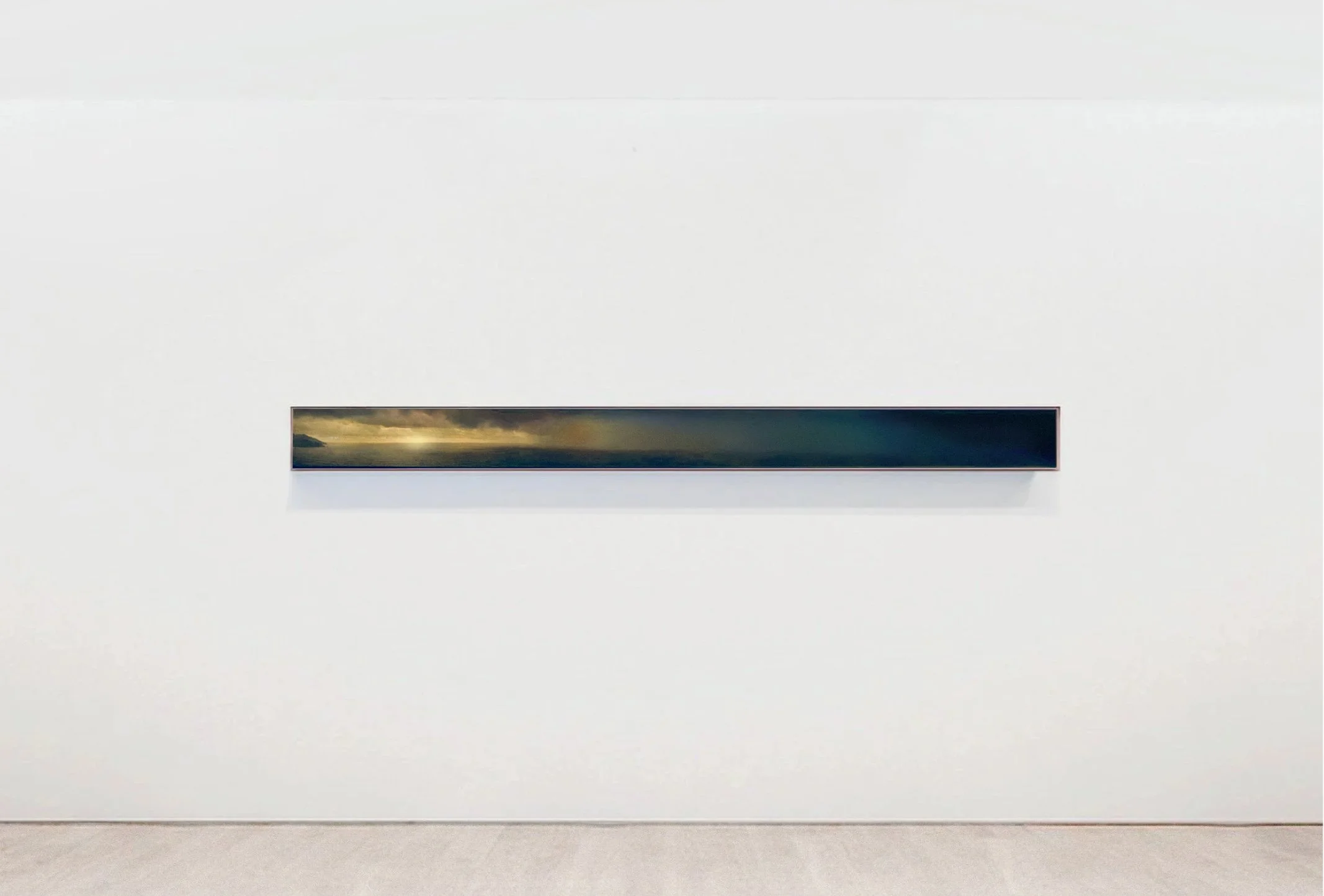
Top: Singularity - Gold, 2025.
Bottom: Totems with Gate’ Gate’ Gate’, 2024
VIDEO
LESS PLASTIC MORE FANTASTIC
A behind the scenes documentary short film focusing on film & art making with a local beach community and it’s creative approach to addressing the ocean plastic pollution in the Gulf of Thailand.
Showcase screening at CANNES, France 2019 ( Lion Festival )
Projects | Reel
Artworks, films, installations, performances and commissions - 4m 12s
The Crystal Cove - The Longhouse Ceremony
Opening of The Longhouse exhibition at Whynam Bay, 2023, Koh Phangang, Thailand
Trilogy
Overview of a conceptual work based on a 17th Century Japanese ink painting by Zen master Sengai Gibon
"The real voyage of discovery consists not in seeking new landscapes, but in having new eyes."
~Marcel Proust, Time Regained